little peoples books
At some point in my years in Beijing I discovered the 小人书/xiǎorénshū/"little person book"/comic.
Yeah, I know, comics aren't exactly new, and definitely not unique to China, but I'm referring to a particular style of comic that does seem to me to be particularly Chinese.
As a kid I loved Asterix and Tintin. I did later learn of the whole bande dessinee scene, but I don't recall ever seeing any other franco-belgian comics in New Zealand at the time. I also loved Commando comics.
And then one day in Beijing, almost certainly at the Panjiayuan market, I discovered Chinese comics. There were Tintin books in translation, so cool, something I recognised and stories I was familiar with. They came in a variety of formats.
And the xiǎorénshū. They remind me a lot of Commando comics. Think: Commando format, but in landscape rather than portrait layout. They're also, I think, I bit "skinnier", more elongated. Or put it this way - they're perfect for slipping into your pocket on the way to school.
And there's the thematic similarity - most of the xiǎorénshū I found were war stories. Of course, Chinese comics tend to focus on China's war of resistance against Japan.
Since then I have built up a small collection of xiǎorénshū, and although a lot of them are war stories, quite a few are not. I have some Tintin comics in xiǎorénshū format, as well as some adaptations of Chinese classics.
I bring this up because this afternoon, after the chores were done, I was reading my book on Pu'er tea I got to a point that was convenient for a break, and went looking for something a little different. I found on one of our many bookshelves this box that I brought back from our last trip to Beijing:
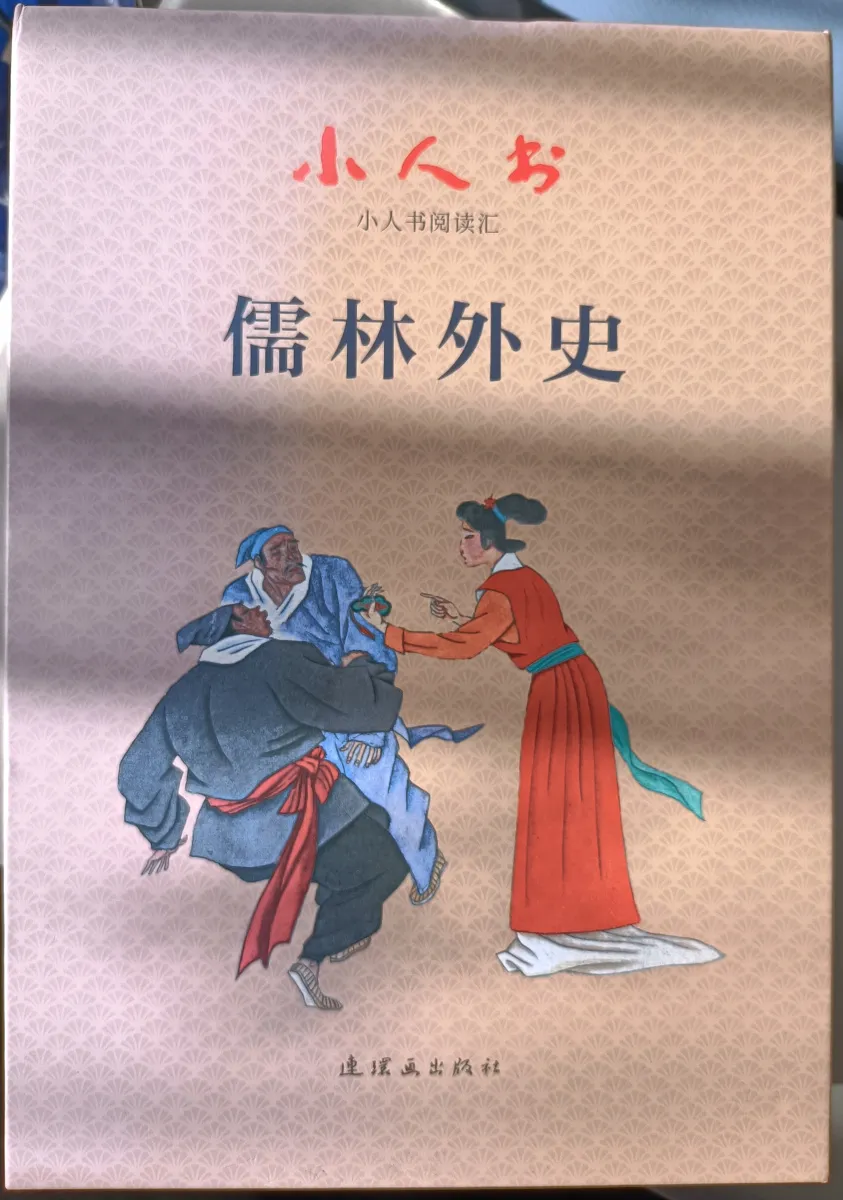 Inside is this:
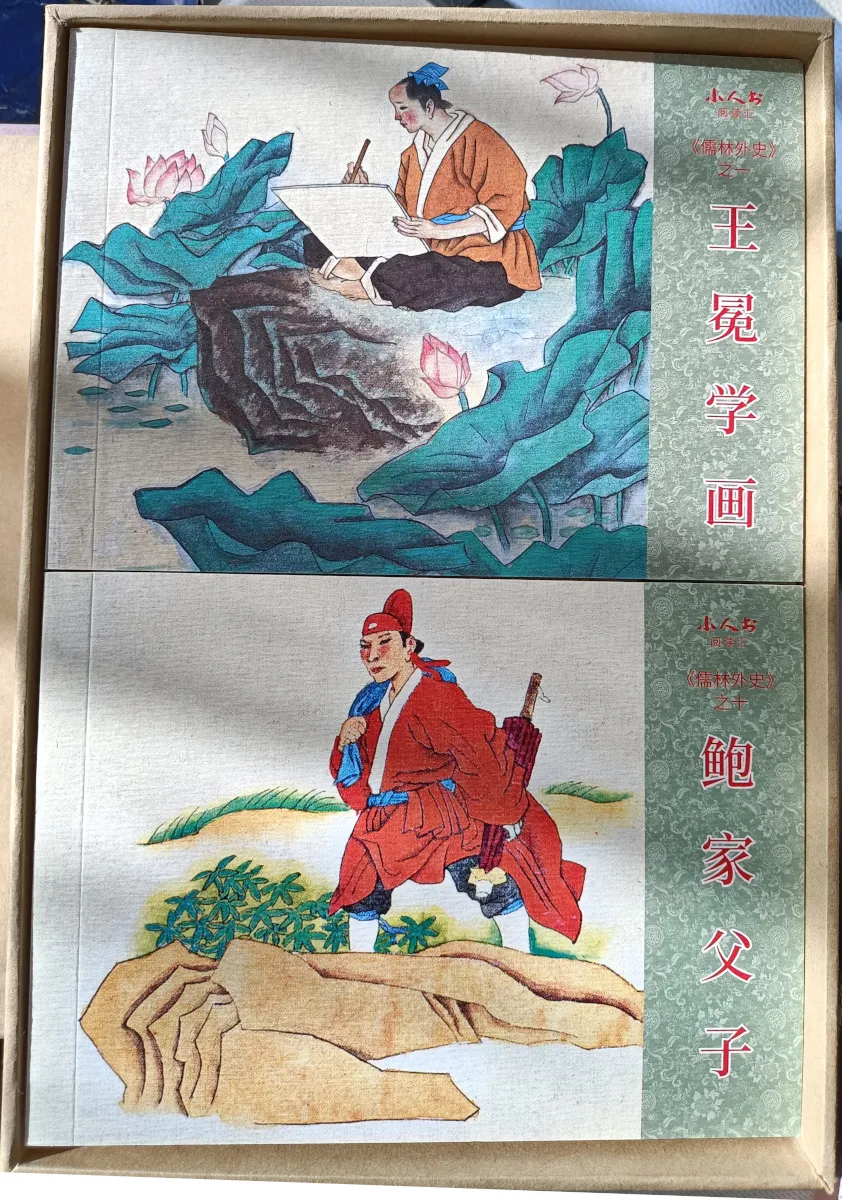 That is, 《儒林外史》/Rúlín Wàishǐ/The Scholars in xiǎorénshū format. The box contains the The Scholars broken up into 19 constituent stories in comic form in separate small books.
Now, considering it is only 19 constituent stories, I'm going to assume that either these are only excerpts from the novel, or that this is a seriously condensed version of the novel. But this is a great example of what I love about the xiǎorénshū format - stories broken down into an easily digestible format. Great for kids, of course, but also great for adults whose literacy might not be great, and great for foreigners looking for manageable Chinese reading practice.
Here's why:
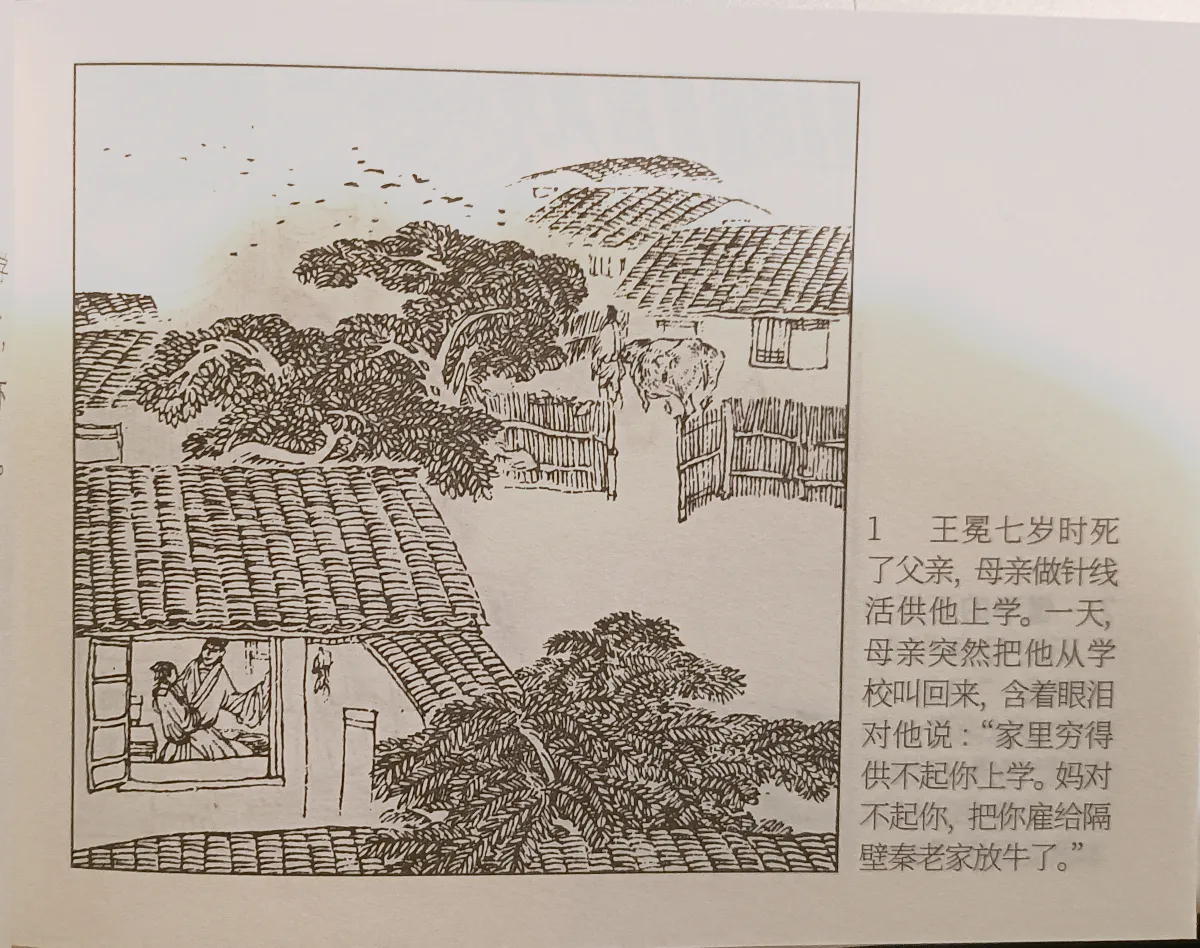
That's page one of book one, the introduction to the first story. You can see there it's a simple sketch and a few sentences of text. And that is how the story continues - a simple sketch and a few sentences introducing each scene in the story. The benefit for a child learning to read is obvious. For a foreigner learning Chinese as a second language, you've got real-world Chinese, real Chinese stories with a real connection to the history and culture, but in small, manageable portions. No big huge wall of text.
Also, I've always loved comics, so my discovery of xiǎorénshū way back then in Beijing made me happy.